
Singing Lessons FAQ: Everything You Need to Know
Answers to the questions people ask before starting singing lessons: who the teachers are, what the first lesson is like, how long and how often, and what to practise in between.
Read more →Singing lessons start with the songs you actually want to sing, then build the breathing, pitching and confidence to sing them well. No experience needed.
Our singing tutors are working singers and vocal coaches, many with music degrees or equivalent experience. Tempo interviews, reference-checks and DBS-checks each one before they teach.
Pop, rock, soul, jazz, musical theatre and classical. Work towards ABRSM, Trinity or Rockschool grades, an audition or a school show, or sing purely because you enjoy it.
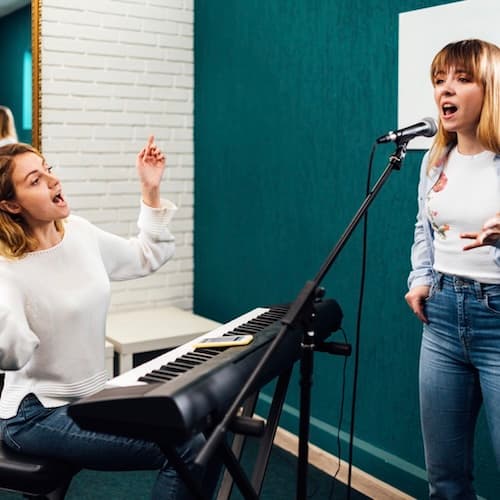
Learn to sing your favourite pop, rock, and contemporary songs. Develop vocal technique, style, and performance skills for modern music.
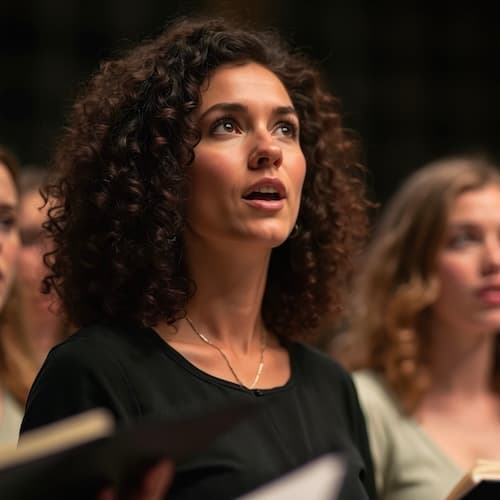
Master classical and choral repertoire, focusing on breath control, tone, and musical expression. Suitable for all levels.
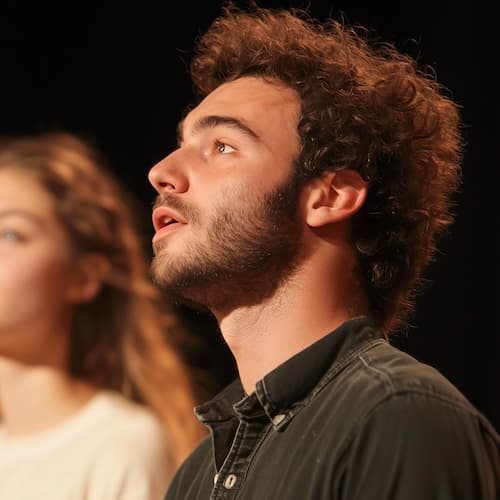
Explore the world of musical theatre. Learn to sing, act, and perform songs from Broadway and West End shows.
How to breathe low and steadily, so notes last, stay in tune and don't strain.
Matching notes, holding a harmony line, and hearing for yourself when you're sharp or flat.
Moving smoothly between chest voice and head voice, and safely extending the notes you can reach.
A warm-up routine to use before any practice or performance, and how to look after your voice.
Choosing the right key, shaping phrases, clear diction and telling the story of a song.
Handling nerves, stage presence, working with a microphone, and preparing for auditions, gigs or exams.
Most new singers are nervous about being heard, so a first lesson starts with a conversation rather than a performance: what you listen to, what you'd like to sing, and what you want to be able to do.
Then come a few gentle warm-ups, which let your tutor hear where your voice sits comfortably, and a first look at a song you've chosen. You'll leave with a short warm-up to repeat at home and one thing to work on before next time.
You don't need to bring anything. There's more in our singing lessons FAQ, and parents of younger singers may find what age a child should start lessons useful.
Singing Lessons in Bristol
Almost everyone can learn to sing in tune. Being truly tone deaf is rare. What most people call tone deafness is an ear and a voice that haven't been trained to work together yet, and that link gets stronger with practice.
Your tutor will ask what you like to sing and what you'd like to get better at, take you through some gentle warm-ups to hear your range, and then start work on a song you've chosen. Nobody expects you to perform.
No. You need yourself, a glass of water and something to play backing tracks on. A microphone only matters later, if you want to practise for gigs or recording.
From around 7. Early lessons are about pitching, confidence and enjoying performing. Heavier vocal technique waits until the voice has matured, usually in the early teens.
Yes. A changing voice is a good reason to have a teacher. Lessons stay within the notes that feel comfortable and adjust as the voice settles, so nothing is forced.
Pop, rock, soul, jazz, musical theatre and classical. Tell us what you listen to and we'll match you with a tutor who sings it.
Yes. Tutors prepare singers for ABRSM, Trinity and Rockschool exams, school shows, musical theatre auditions and choir solos. If you have a date to work to, say so when you enquire.
No. Most singers learn songs by ear. Reading helps if you sing in a choir, take classical grades or do musical theatre, and your tutor can teach it gradually if you want it.
Good teaching does the opposite. You'll learn to warm up properly, support notes with your breath and stop before you push. Most strain comes from singing too loudly or too high without that technique.
Yes, by video call. Because of the slight delay on a call, you sing along to a backing track at your end rather than the tutor accompanying you live. It works well.
Thirty minutes is enough for younger children. Teenagers and adults usually choose 45 or 60 minutes, which leaves time to warm up properly and still work on a whole song.
Yes — every first lesson is commitment-free, so you can make sure the tutor is the right fit before booking any more.
Singing needs no instrument and very little space, so lessons work just as well in your living room as at a tutor's studio or online. Tell us where you are and we'll match you with a tutor nearby.
Clifton, Bishopston, Henleaze, Westbury-on-Trym, Filton
Bedminster, Southville, Ashton Gate, Knowle
Montpelier, Stokes Croft, City Centre, Kingswood
Answers to the questions people ask before starting singing lessons: who the teachers are, what the first lesson is like, how long and how often, and what to practise in between.
Read more →Discover how music education is evolving in 2026, from AI-powered learning platforms to hybrid lessons, and explore the best ways to learn guitar, piano, and singing in Bristol and beyond.
Read more →Is 5 too young? Is 12 too late? A practical, instrument-by-instrument guide to when children are ready for one-to-one music lessons — and the signs to look for.
Read more →One price for every tutor. Pay lesson by lesson, or save £2 an hour with a block.
Best value for regular students — £36/hr on a block of 3, 6 or 10.